

If your EHR adds just two extra minutes to each patient visit, those minutes can quickly add up across the week. Those minutes compound into longer clinic days, delayed chart closure, missed follow-ups, refill backlogs, and billing rework. Over time, “small” friction becomes a structural inefficiency, one that affects patient access, staff workload, and leadership confidence in operational reporting.
Most practices already have an EHR. The real question is whether the system functions like a modern clinical and operational platform. A modern EHR should make routine workflows faster and safer, support coordinated care across settings, strengthen documentation quality, and protect patient information, without forcing teams into workarounds and after-hours charting.
This blog breaks down essential EHR key features that consistently improve efficiency and care delivery in outpatient and multi-provider environments. The goal is practical: what to look for, why it matters, and how to evaluate these capabilities in real workflows.
What “modern” means in real-world practice
A modern EHR is not defined by a long module list or a sleek interface. It is defined by whether it reliably supports three layers of work:
1) Workflow performance
Your teams should be able to chart, order, prescribe, schedule, communicate, and close encounters with minimal friction.
2) Clinical safety support
The system should provide meaningful decision support and guardrails without drowning clinicians in alerts.
3) Operational truth
Leadership should be able to trust reports and dashboards without constant manual cleanup.
When one of these layers is weak, practices compensate with parallel tools, spreadsheets, sticky notes, duplicated entry, phone calls, and “personal processes” that are hard to scale or standardize.
A familiar example of what happens when workflows do not connect
Consider a patient who calls to reschedule an appointment.
The front desk updates the calendar, but the reminder system does not synchronize with the change.
The patient arrives on the wrong day. The visit has to be fitted into an already busy schedule. Documentation is completed under time pressure. The coding team later requests clarification, delaying the billing workflow.
Meanwhile, different systems may show different information about the same visit.
The problem is not simply scheduling.
It is what happens when individual healthcare workflows operate separately instead of as parts of one connected system.
10 essential features of a modern EHR
User-friendly interface that supports clinical thinking
A user-friendly interface is not a “nice to have.” It is a productivity and safety feature. Clinicians should be able to find the patient story quickly and complete high-frequency tasks without searching across multiple screens.
A modern interface supports:
- Fast chart review (what changed since the last visit is easy to identify)
- Predictable navigation (the same task works the same way each time)
- Minimal steps for common actions (orders, refills, results review, referrals)
How to evaluate it: In a demo, ask the vendor to complete the top five daily workflows using realistic scenarios. If they avoid showing click paths, that is a signal by itself.
Integrated scheduling that protects patient flow
Scheduling is not just administrative; it is throughput management. When scheduling is disconnected from reminders, intake, and visit workflows, staff time shifts from patient service to coordination work.
Modern scheduling capability means appointment creation, reminders, rescheduling, cancellation handling, and availability rules work together as one workflow. This reduces avoidable gaps and reduces no-shows by making patient communication more consistent.
What good looks like: A schedule that is easy to maintain and reflects reality—without staff managing multiple tools to keep it accurate.
Clinical decision support that helps without creating alert fatigue
Clinical decision support (CDS) should function like guardrails, not speed bumps. The value is in timely, evidence-based prompts that are specific enough to matter.
A modern CDS capability typically includes:
- High-signal alerts (allergy conflict, contraindication risk, critical abnormal results)
- Specialty-aware order sets and pathways
- Governance controls so alerts remain relevant and tuned over time
A practical principle: Fewer alerts, higher trust. If clinicians ignore the CDS because it is noisy, the system is creating risk rather than reducing it.
E-prescribing that streamlines medication workflows
Medication workflows are high-volume and error-sensitive. E-prescribing modernizes this process by allowing prescriptions to be sent electronically, improving accuracy and reducing manual steps.
A strong e-prescribing capability supports:
- Direct electronic transmission to pharmacies
- Integrated medication history and reconciliation workflows
- Refill routing and tracking that reduces back-and-forth
This feature often delivers a clear efficiency gain because it reduces pharmacy callbacks, accelerates refills, and keeps medication records more consistent.
Customizable templates that reduce documentation time without losing meaning
Templates exist to reduce documentation time while improving completeness and consistency. But templates only help when they match real practice workflows.
Modern EHRs allow templates to be tailored by:
- Specialty needs and clinical workflows
- Visit types (new patient vs follow-up vs procedure)
- Provider roles (clinician vs nurse vs MA documentation tasks)
The right balance matters:
- Too rigid → clinicians bypass templates, and documentation quality varies.
- Too unstructured → reporting becomes unreliable, and coding alignment weakens.
Modern systems support customization with governance so documentation stays efficient and usable.
Patient portal features that reduce administrative load
A portal is often described as “patient engagement,” but its operational value is just as important. When patients can access results, request refills, manage appointments, and communicate securely through structured workflows, staff workload decreases.
Instead of listing everything a portal can do, focus on what it should reduce:
- Fewer routine phone calls
- Fewer manual reminders
- Fewer missing forms and intake gaps
A modern portal supports self-service in a secure and trackable way, while keeping the practice in control of communication workflows.
Billing and revenue cycle support that reduces rework
Clinical workflow and revenue performance are linked. When billing is disconnected from documentation, the practice pays through repeated corrections, delayed claim submission, and denials.
A modern EHR supports revenue integrity by improving charge capture and reducing back-and-forth between clinical and billing teams. Even when the revenue cycle is handled in a separate system, the EHR should support structured documentation and clean handoffs.
Here is the operational difference:
| When billing support is weak | When billing support is strong |
| Missing details trigger repeated follow-up | Documentation supports charge capture earlier |
| Higher rework for claims | Cleaner, more consistent claims |
| Denials increase for preventable reasons | Fewer avoidable denials and faster resolution |
| Limited visibility into bottlenecks | Clearer tracking and accountability |
Interoperability that supports coordinated care
Interoperability is essential for referrals, transitions of care, shared patients, and reducing duplication. Without it, clinicians spend time requesting records and making decisions with incomplete clinical history.
Modern interoperability is not only about sending information. It’s about receiving and using it:
- External records can be reviewed and reconciled efficiently
- Shared data is structured enough to be meaningful, not just a scanned attachment
- Exchange supports workflow, not “extra steps after the visit”
If interoperability is weak, practices often repeat tests and spend time on manual coordination. That impacts both efficiency and patient care quality.
Reporting and analytics that produce operational truth
Reporting is only valuable when teams trust it. If EHR reporting is inconsistent, organizations rebuild dashboards outside the system and end up with multiple versions of the truth.
A modern EHR supports reporting that reliably answers operational questions, such as:
- Where are throughput bottlenecks happening (check-in, rooming, labs, follow-up)?
- Are reminders reducing no-shows?
- Are care gaps closing across providers consistently?
- Which patient populations need outreach?
- Are quality measures improving based on real documentation?
The goal is decision-ready insight, without weeks of manual cleanup and reconciliation.
Data security and privacy built into everyday workflows
Protecting PHI is non-negotiable. A modern EHR must support technical and operational controls that reduce risk while allowing appropriate access.
A defensible security posture includes:
- Role-based access controls (least privilege)
- Encryption in transit and at rest
- Audit logs that support investigation and compliance needs
- Ongoing update readiness and monitoring support
Security is not only technical; it is operational. Modern systems support workflows that make secure behavior easier to follow consistently, rather than relying on staff memory alone.
How to evaluate these features without getting trapped by “demo theater”
Many EHR demos show ideal workflows with perfect data. Real life is messy. A better approach is to run scenario-based evaluation.
Five workflow tests that reveal modern capability:
- 60-second chart review: Can a clinician understand the story quickly?
- Refill processing: Can refills be routed safely with minimal handoffs?
- Scheduling disruption: Can staff reschedule without creating gaps and confusion?
- Referral handoff: Can external history be exchanged in usable form?
- Reporting consistency: Can leadership get the same answer twice without manual cleanup?
If the system struggles in these, the practice will compensate with workarounds—and those workarounds become permanent.
Common pitfalls practices should avoid
- Do treat EHR modernization as workflow redesign, not just “system training.”
- Do define success metrics (time-to-close charts, no-show rate, refill cycle time, denial rate, report accuracy).
- Do build governance around templates, CDS rules, data definitions, and access roles.
- Don’t assume the presence of a feature equals good performance.
- Don’t postpone data quality until after go-live.
- Don’t allow parallel documentation systems to become normal.
Conclusion
Modern EHR systems do not succeed because they have more features. They succeed because the right features are integrated into daily workflows, reducing rework, improving throughput, supporting safer decisions, strengthening patient access, and producing reporting teams can rely on. The ten features outlined in this blog provide a practical standard for evaluating whether an EHR will improve practice efficiency without increasing administrative burden.
If you are reviewing your current EHR or evaluating a new system, use this 10-feature checklist to score gaps and prioritize improvements. For a structured assessment and a clear modernization roadmap aligned to real clinical workflows, connect with CalOne to schedule an EHR capability review.
Frequently asked questions
What are the most important features of an EHR?
Clinical documentation, scheduling, e-prescribing, decision support, patient access, interoperability, reporting, billing support, and security are among the core capabilities. How well they work together is just as important as whether they are available.
What should a small clinic look for in an EHR?
Start with the workflows used every day: appointments, chart review, documentation, prescribing, patient communication, follow-up, and reporting. A smaller clinic can feel unnecessary administrative work particularly quickly when these workflows require several systems.
Why is EHR interoperability important?
Interoperability helps clinicians access relevant information created outside their own organization. This becomes important when patients receive care from several providers or facilities.
How are modern EHRs reducing documentation burden?
Along with templates and voice dictation, ambient documentation is becoming more common. These tools can create draft notes from the clinical conversation, but accuracy, privacy, integration, and clinician review remain important considerations.
Care within reach
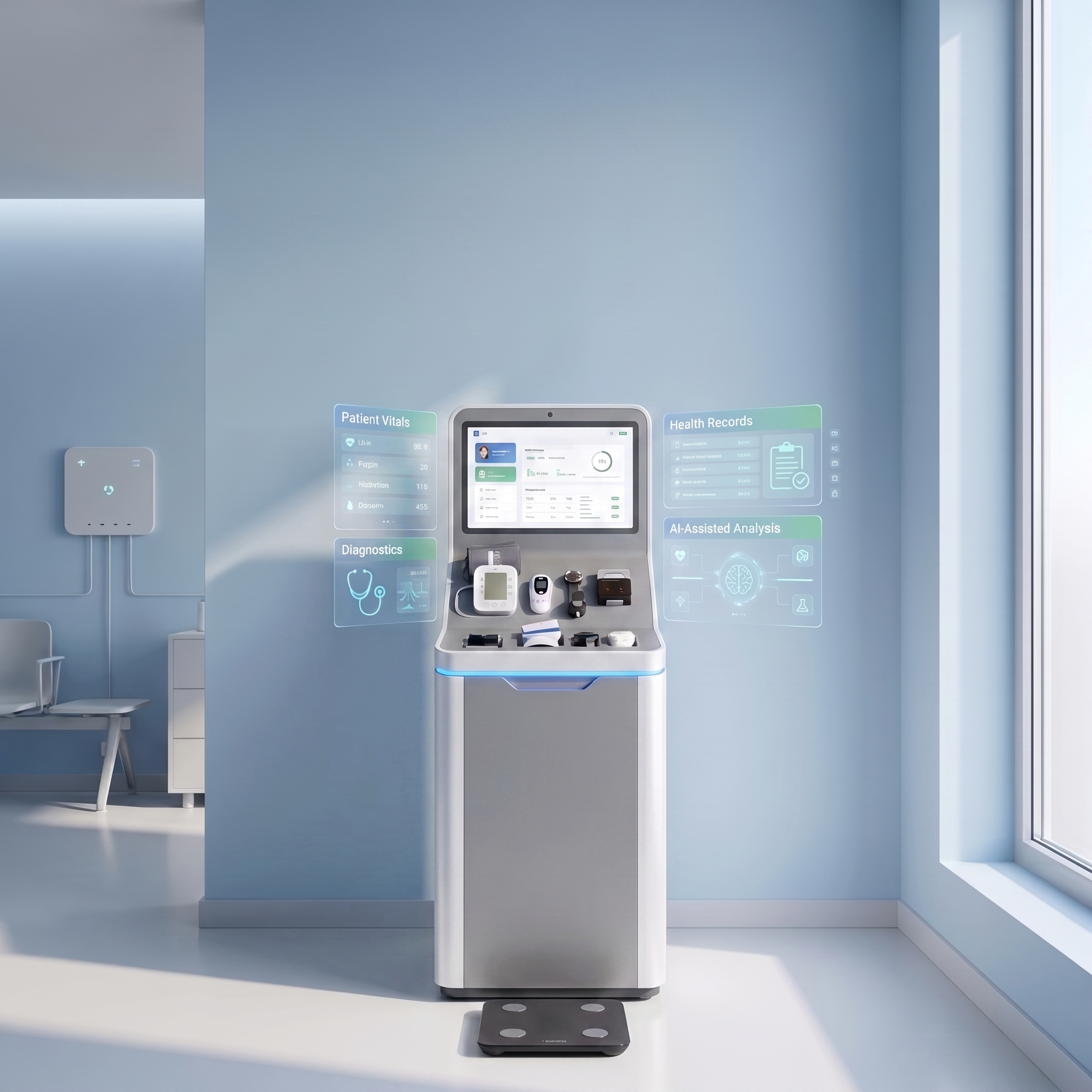
Rapid on-site intake and automated vital capture — 69+ screening tests at the point of care.
Clinical command
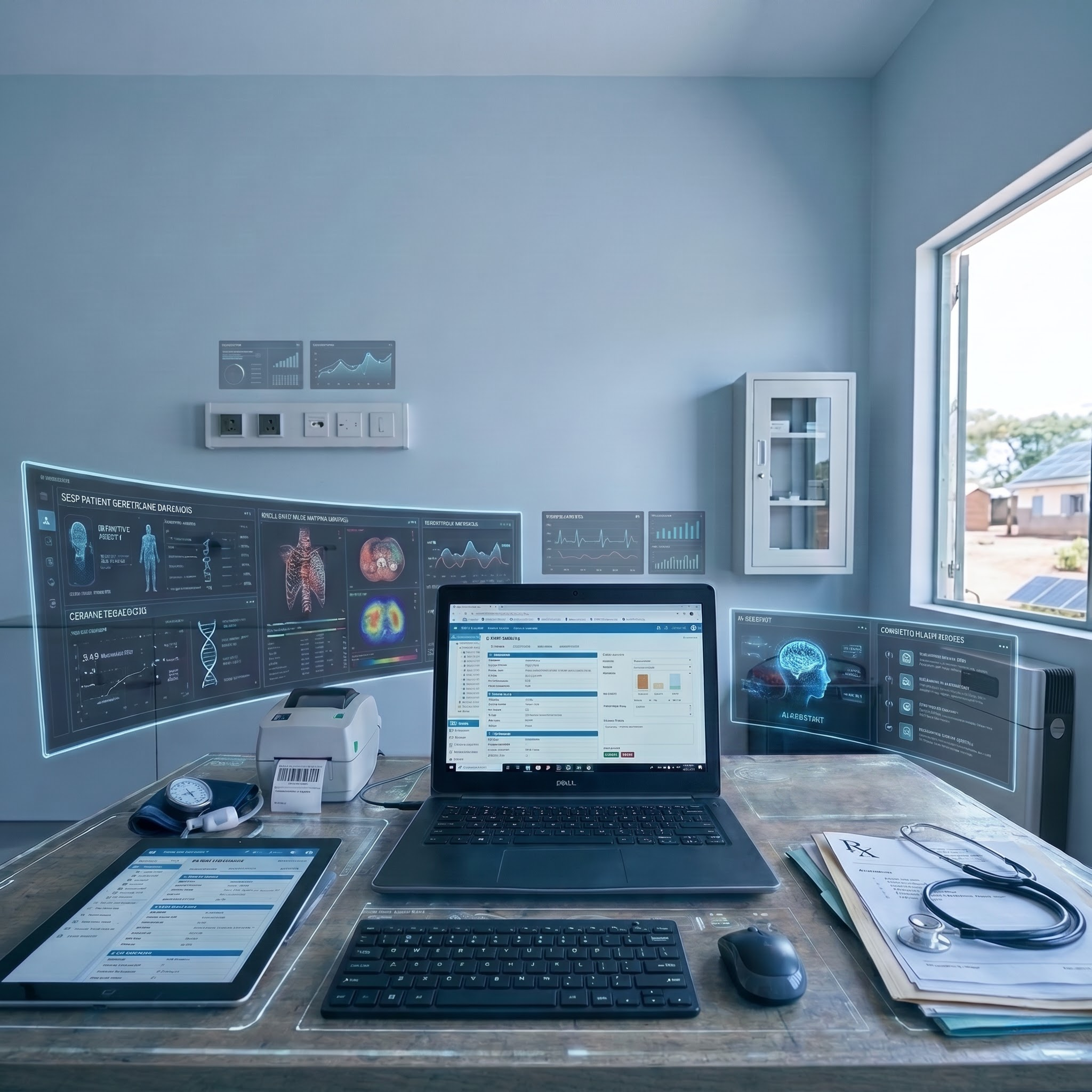
Streamlined clinical workflows and facility operations — every record, visit, and order in one system.
Health in hand
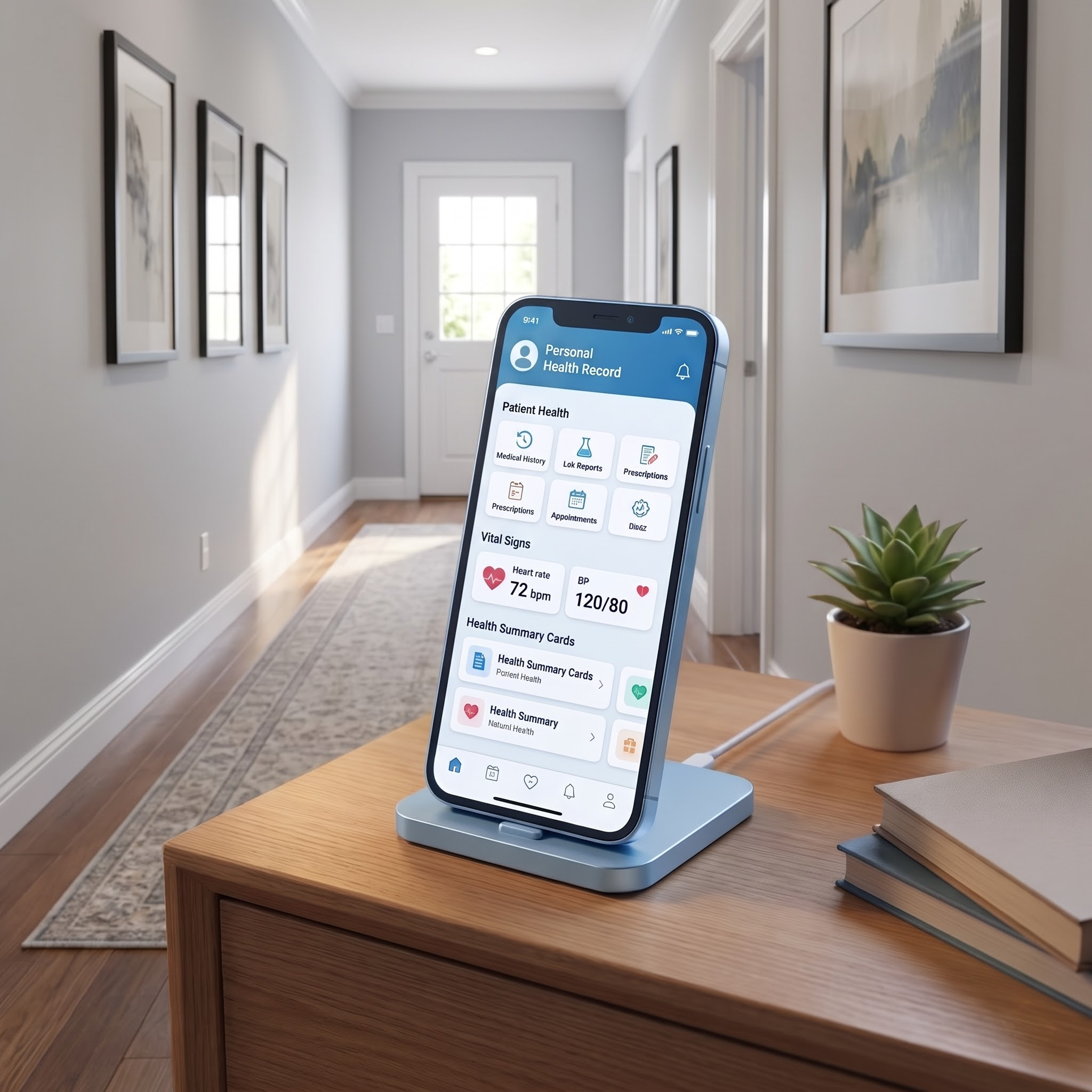
Continuous patient engagement and health record ownership — one secure, portable health journey.
Intelligence for care
Automated clinical decision support and early risk detection from the complete patient record.