

A clinician opens the patient’s chart, scrolls through years of data, and still can’t answer a basic question with confidence. Medications are outdated. Problem lists don’t match reality. Important details are buried somewhere in a pile of copied notes. The record is digital. The care behind it often isn’t.
It’s one of the stranger contradictions in modern healthcare.
Electronic health records are standard now, nearly every hospital and most physician practices document care digitally. But the same complaints keep surfacing: fragmented care, clinician burnout, documentation gaps, reporting nobody fully trusts. None of that is a coincidence. It comes down to how these systems get used day to day, not whether they exist.
Here’s the short version of why: installing an EHR and using it well are two different jobs. Most organizations have handled the first one. Far fewer have nailed the second. And as healthcare gets more complex, more data-driven, and more accountable to outside scrutiny, EHR adoption has stopped being a background IT concern and turned into something closer to a clinical skill.
What is EHR Adoption?
EHR adoption is the consistent, workflow-aligned use of the record as the one real source of truth for clinical care, documentation, coordination, and reporting, not just a system that happens to be running in the background.
In practical terms, it shows up when clinicians and staff actually trust the system to reflect real decisions, current patient status, and accurate history. Login counts, note volume, and compliance checkboxes don’t measure that. Trust, consistency, and how usable the system feels in daily workflows, that’s what measures it.
When adoption is missing, you see the workarounds: parallel systems, paper notes, handoffs based on memory, documentation that lives in someone’s head instead of the chart. When it’s there, the EHR becomes part of how care actually gets delivered, communicated, and evaluated, rather than a separate task layered on top of the real work.
EHR Adoption vs EHR Implementation
Implementation is about whether the system has been installed, configured, and handed to users. It’s a technical readiness question: timelines, functionality, meeting the baseline regulatory bar.
Adoption is about whether people actually use that system reliably enough to support patient care, compliance, and real decisions. It’s as much a behavioral question as a technical one: does it fit the workflow, is the data any good, is anyone maintaining it over time.
Plenty of organizations nail the first part and spend years still working on the second. The result is an EHR that runs fine technically while quietly falling short of what it’s supposed to do for care and decision-making.
Why Does EHR Adoption Matter Now?
The urgency behind this has grown for a few structural reasons.
Value-based care now sits at the center of reimbursement. The Centers for Medicare & Medicaid Services puts more than 60 percent of Medicare beneficiaries in value-based or alternative payment arrangements. Those models run on accurate documentation, dependable quality measures, and clinical data that can hold up to scrutiny. Inconsistent EHR use puts all three at risk.
Clinician workload has gotten heavier too. The American Medical Association’s surveys keep finding that over half of physicians point to EHR-related tasks as a real driver of burnout. Misaligned workflows and inconsistent documentation standards mean physicians spend real time fixing records instead of treating patients.
Patient access regulations, meanwhile, assume the record on the other end is accurate, timely, and easy to understand. When day-to-day usage doesn’t live up to that assumption, compliance risk goes up, certified technology or not.
Snapshot: EHR Adoption in the United States
What national data shows, as of 2024:
- 99 percent of non-federal acute care hospitals use certified EHR technology
- 91 percent of office-based physicians use a certified EHR system
- Federal incentive programs drove that growth over the past decade, up from just 17 percent of physicians in 2008
Where adoption maturity still lags:
- Behavioral health and long-term care settings
- Rural and small independent practices
- Organizations with limited informatics and governance resources
Worth remembering: high usage rates describe presence. They don’t describe performance or reliability, that’s a separate question entirely.
How Inconsistent EHR Use Affects Patient Care
How consistently a clinic actually uses its EHR shapes patient experience and safety more directly than most people assume.
An outdated or incomplete problem list isn’t something a clinician can safely lean on. A medication list that isn’t reconciled consistently raises real prescribing risk. And when documentation style varies sharply between departments or providers, continuity breaks down right when it matters most, during a transition in care.
Rarely does any single one of these cause a crisis on its own. They build up quietly: delays, repeat tests, missed follow-ups, harm that could have been avoided, even though the record was sitting right there the whole time.
Real-World Impact Areas
Emergency care. Incomplete or unreliable electronic histories often push clinicians toward repeating diagnostic tests or delaying treatment decisions, because the prior results can’t be trusted. That adds cost, adds time, and exposes patients to procedures they didn’t need.
Care transitions. A discharge summary that isn’t clear or consistent leaves a gap someone has to fill later, or doesn’t. CMS data shows close to 20 percent of Medicare patients end up back in the hospital within 30 days, and documentation or communication breakdowns are a recurring thread in why.
Medication safety. The Agency for Healthcare Research and Quality puts the national estimate at more than one million adverse drug events a year, and a meaningful share of them trace back to documentation or reconciliation that fell through somewhere.
Interoperability Depends on Adoption
Interoperability usually gets framed as a technical problem: standards, interfaces, data exchange. In practice, it depends first on how consistently the EHR is actually used inside each organization.
Inconsistent documentation, data trapped in free text, clinical fields nobody kept current, and a shared record loses its value fast. The connection between two systems can work perfectly, and the data still won’t be worth much on the other end.
Getting data to move from one system to another was never really the hard part. Making sure what arrives is something a clinician can actually use, that’s the real test.
Before and After EHR Adoption Matures
Before: documentation is delayed or written defensively. Coding teams field constant clarification requests. Quality reporting needs manual correction every cycle. Revenue cycle performance swings unpredictably.
After: documentation lines up with how care actually happens. Coding accuracy improves. Reports become repeatable instead of custom-built each time. The Healthcare Financial Management Association points to documentation-related deficiencies as a leading cause of preventable denials, a good reminder of what weak adoption actually costs operationally.
Common Barriers to Strong EHR Usage
These show up consistently across healthcare systems:
- Training built around system navigation rather than clinical workflows
- Alert volumes growing without anyone governing them
- Informal workarounds quietly becoming the accepted way of doing things
- Documentation standards that shift from department to department
- Little to no resource investment after go-live
Let these sit long enough, and clinician trust wears thin, and progress stalls right along with it.
Adoption vs Optimization
These two get lumped together, but they’re solving different problems. One is about getting the EHR used consistently enough to trust. The other is about making it better once that trust already exists.
HIMSS maturity data shows plenty of organizations get stuck at that first stage. And without steady, trustworthy data flowing in, things like analytics, decision support, and population health work never really get the chance to scale.
Compliance, Risk, and Trust
Regulators care less these days about whether a system is simply running, and more about whether the data inside it can actually be trusted. HIPAA audits, patient access enforcement, and quality reporting reviews all lean on accurate, traceable documentation to make that call.
Inconsistent usage creates risk that tends to stay hidden until someone goes looking for it:
- Audit trails with real gaps in them
- Clinical intent that’s hard to pin down after the fact
- Access controls applied unevenly across the organization
At a governance level, how well an organization actually uses its EHR and its overall credibility have become close to the same question.
EHR Adoption Maturity Levels
- Basic digital use, paper replaced, workflows otherwise unchanged
- Standardized documentation, core data elements consistently maintained
- Workflow alignment, the EHR supports how care actually happens
- Data-driven operations, reporting and improvement run on EHR data
- Continuous optimization, governance and feedback keep quality up over time
Most US organizations sit somewhere between levels two and three. Getting past that point has more to do with leadership engagement than with technology spend.
What the Future Looks Like
AI-assisted documentation and more advanced clinical decision support are going to raise the bar on data quality, because tools like these only work as well as what feeds them. Layered on top of inconsistent usage, they’re just as likely to amplify the mess as to clean it up.
Policy direction is also pushing harder on interoperability, transparency, and accountable data use. How mature an organization’s usage is will increasingly decide whether it can meet those expectations without piling more onto clinicians.
Where a Connected System Makes This Easier
A lot of what causes inconsistent usage traces back to one thing: a system that was never built around how clinicians actually work in the first place. A platform that keeps documentation, decision support, and point-of-care data inside one continuously updated record removes several of the barriers above by design, instead of leaving staff to work around them.
That’s the thinking behind CalOne’s own EHR: one connected patient record instead of a set of disconnected modules, with its RIUS AI layer surfacing relevant safety checks and summaries right inside the consultation, so clinicians spend less time reconciling records and more time actually using them. It won’t fix governance or training on its own, that still takes people and process, but it takes a real bite out of the daily friction that causes adoption to stall in the first place.
Conclusion
The United States has largely gotten EHR deployment done at scale. What’s still uneven is how well those systems get used once they’re in place.
That shapes patient safety, clinician experience, operational stability, and how an organization looks to regulators. Owning an EHR was never really the finish line. Using it well is.
Healthcare leaders should stop asking “do we have an EHR?” and start asking “how well is it actually used in daily care?” That means checking in on maturity regularly, building training around real clinical workflows, tightening documentation and alert governance, and treating this as ongoing work rather than a project with an end date.
Curious how CalOne’s connected platform tackles this problem directly? Learn more about CalOne.
FAQ
What is EHR adoption, in plain terms?
It’s whether clinicians and staff actually trust and use the EHR consistently enough for it to reflect real decisions and current patient status, not just whether the software is installed and technically running.
What’s the difference between EHR adoption and EHR implementation?
Implementation is whether the system is installed, configured, and handed to users. Adoption is whether people actually use it reliably enough to support patient care, compliance, and real decisions. Plenty of organizations finish the first and spend years on the second.
What percentage of US hospitals and physicians actually use an EHR?
As of 2024, 99 percent of non-federal acute care hospitals and 91 percent of office-based physicians use certified EHR technology, up from just 17 percent of physicians in 2008. That number describes presence, not whether the system is being used well.
How does inconsistent EHR use affect patient safety?
An outdated problem list or a medication list that isn’t reconciled regularly raises real prescribing risk. AHRQ puts the national estimate at more than one million adverse drug events a year, and a meaningful share trace back to documentation or reconciliation gaps.
Does having an EHR automatically mean interoperability works?
No. Interoperability depends first on how consistently the EHR is used inside each organization. Two systems can connect perfectly on the technical side and still exchange data nobody can actually use if documentation underneath it is inconsistent.
What are the biggest barriers to strong EHR adoption?
Training built around clicking through screens instead of real clinical workflows, alert volumes nobody governs, informal workarounds becoming the norm, documentation standards that shift between departments, and little investment in the system after go-live.
Care within reach
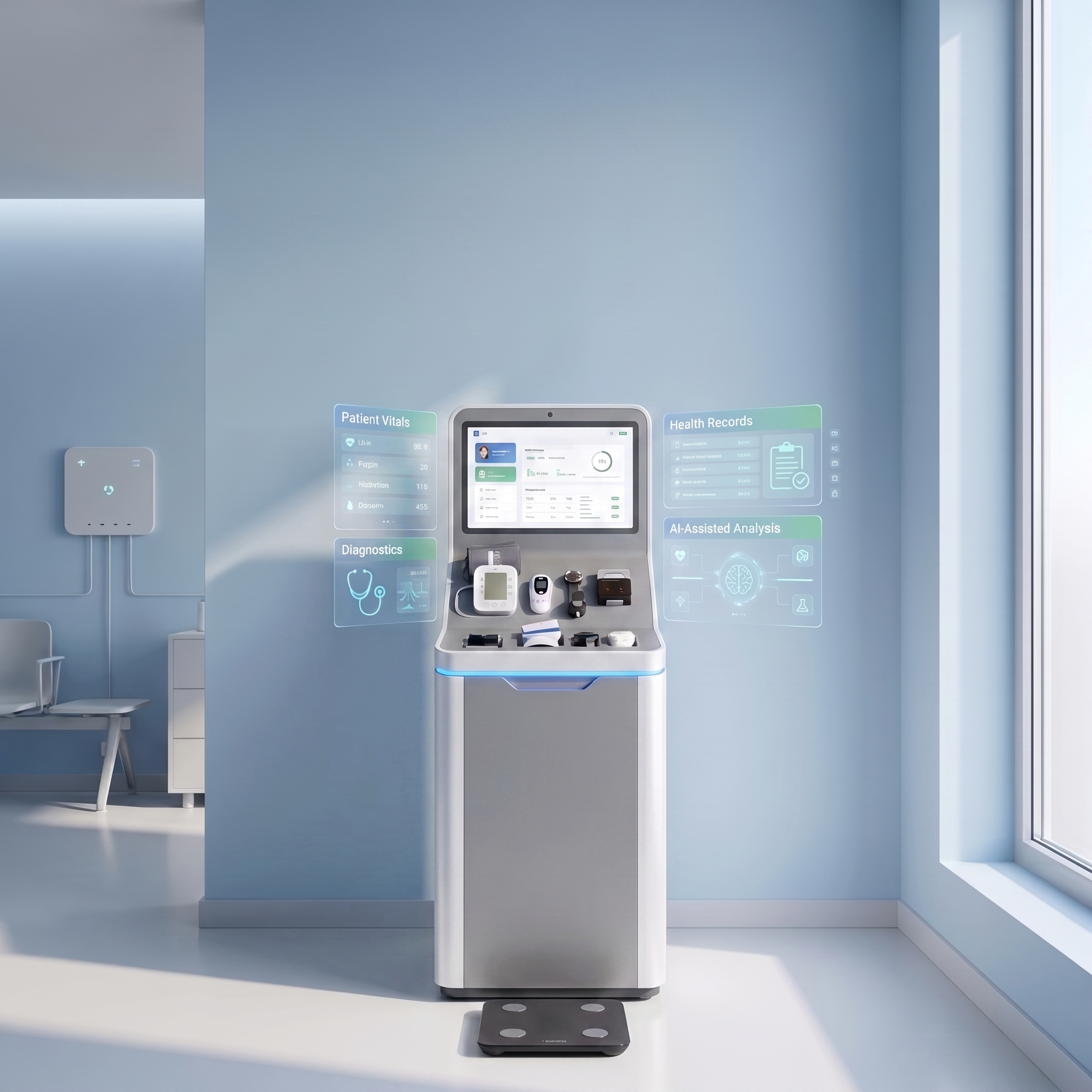
Rapid on-site intake and automated vital capture — 69+ screening tests at the point of care.
Clinical command
Streamlined clinical workflows and facility operations — every record, visit, and order in one system.

Health in hand
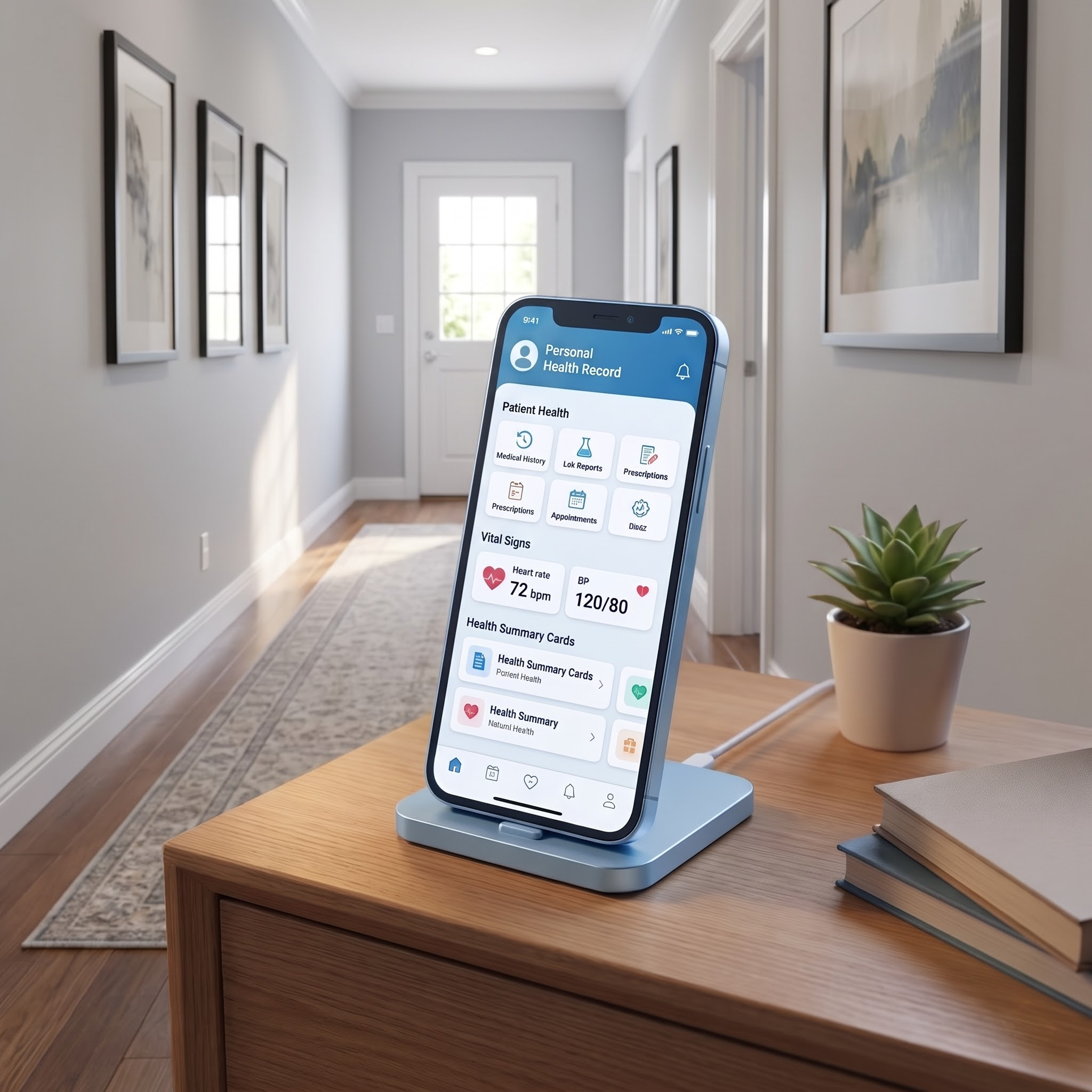
Continuous patient engagement and health record ownership — one secure, portable health journey.
Intelligence for care
Automated clinical decision support and early risk detection from the complete patient record.